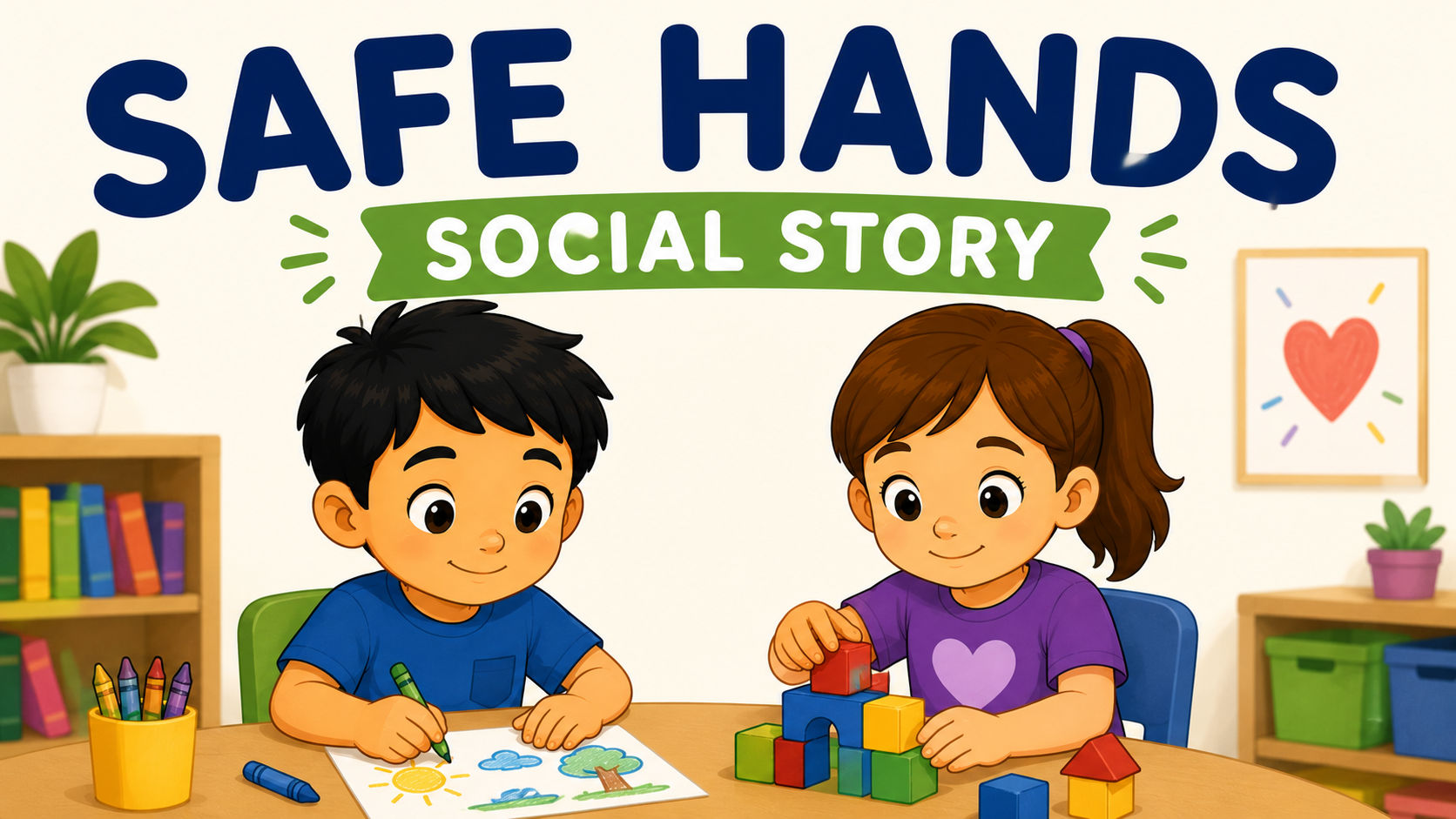
Hands to Myself Social Story: Free Safe and Gentle Hands Visual
|
Getting your Trinity Audio player ready...
|
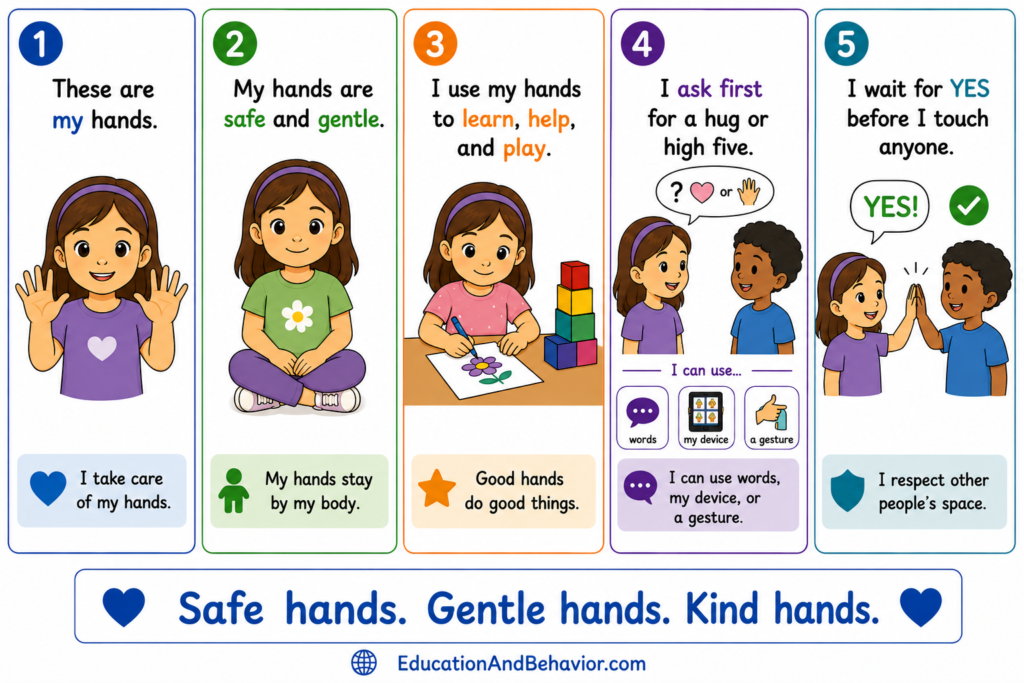
This visual for boys and girls, can help children learn what it means to use safe and gentle hands.
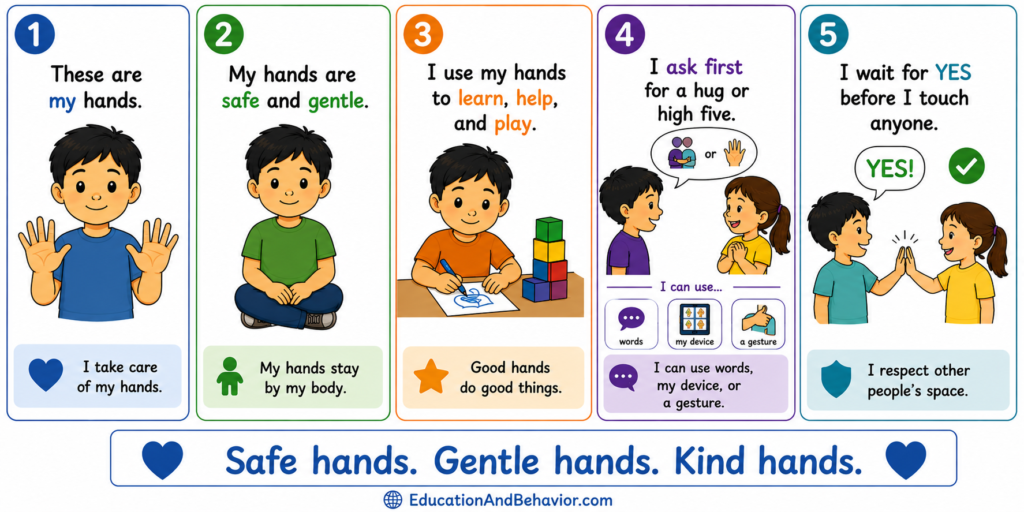
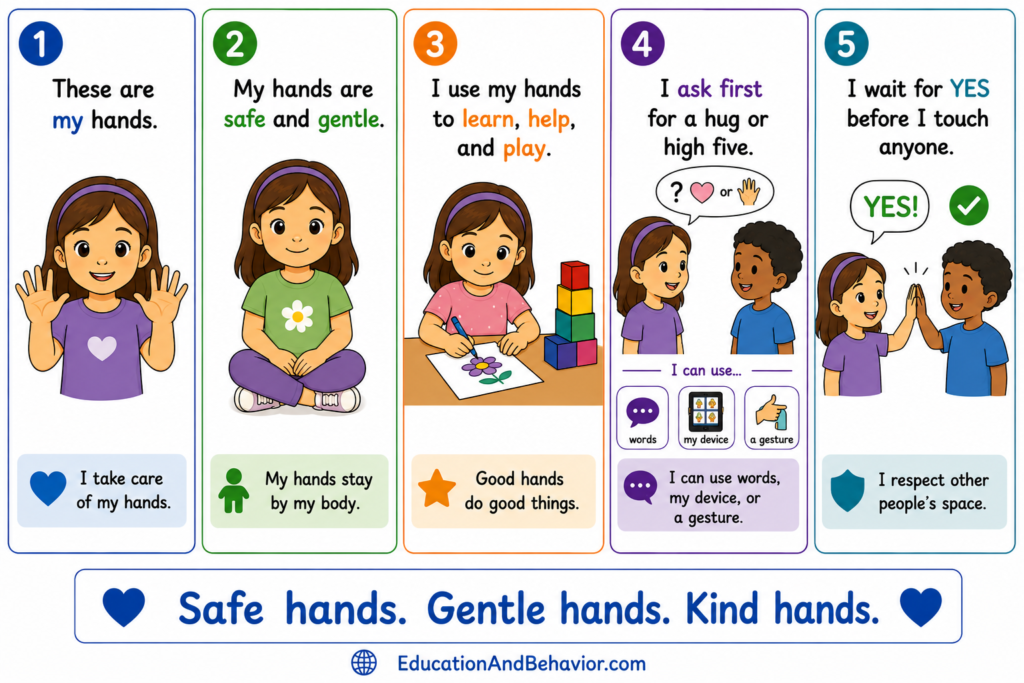
It uses simple language and pictures to teach children to keep their hands near their own body, use their hands appropriately, ask before giving a hug or high five, and respect other people’s space.
How to use it
Show the visual before situations where touching or hitting tends to occur, rather than only bringing it out after a problem.
Point to each picture and use the same short language each time.
Children who use an AAC device can practice requesting a hug or high five using their communication system.
If a child or student struggles with hitting, grabbing, or touching others, adults can also reinforce the specific replacement behavior they want to see—for example, “Nice job using safe hands” or “I like how you kept your hands to yourself.”
You may wish to consider what reinforcement method would be most effective for the individual you are working with (e.g., praise, break, preferred activity, thumbs up, high five, smile, etc.).
Important: Visual supports work best when they are paired with direct teaching, practice, reinforcement, and individualized support.
A visual by itself may not change a behavior if a child or student is still learning the skills needed to use an alternative behavior.
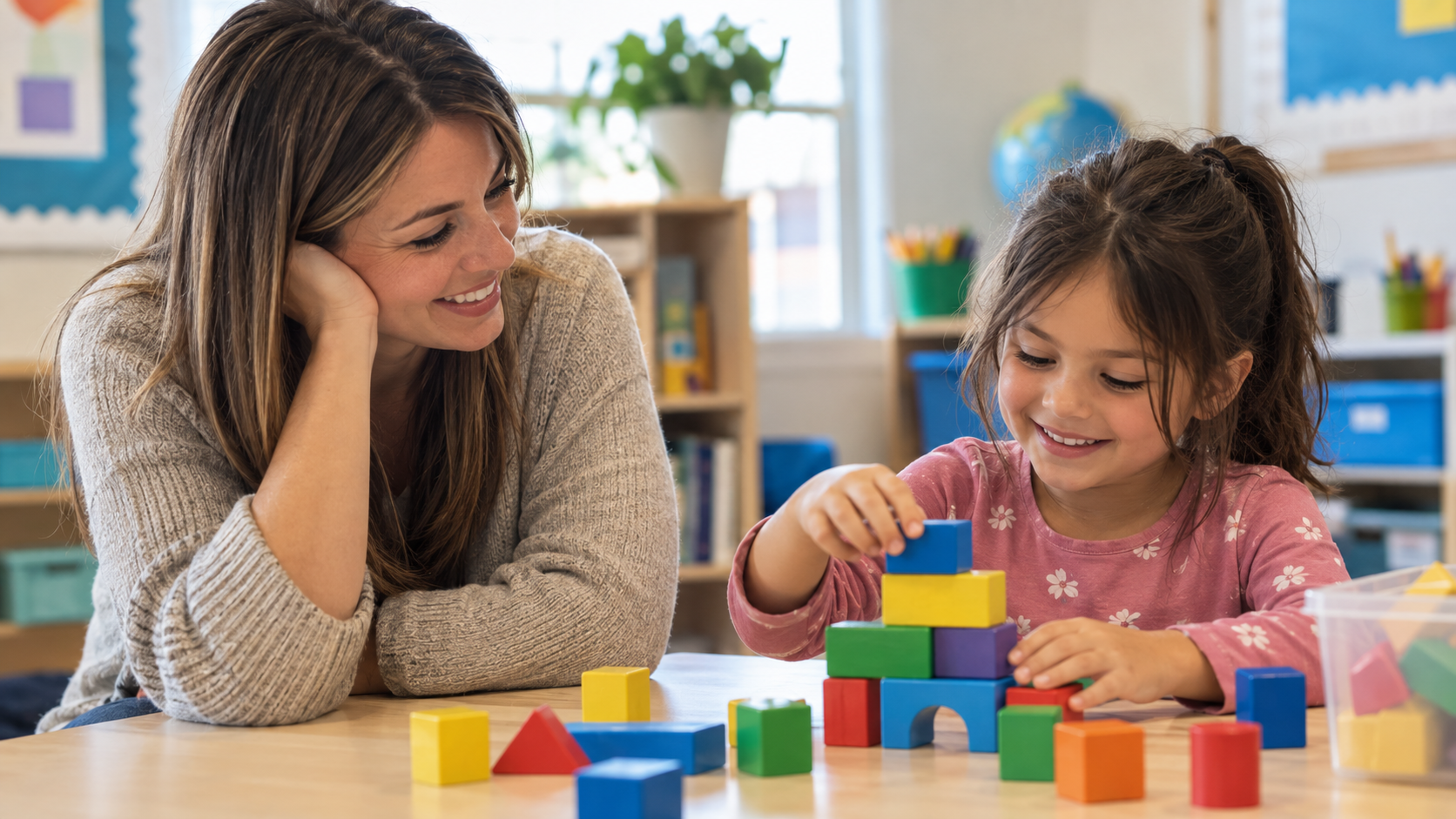
Contact me at rachelwise@educationandbehavior.com to make a personalized social story for you, that looks closer to how your child or student looks. I can make social stories for kids and adults.

Rachel Wise is the author and founder of Education and Behavior. Rachel created Education and Behavior in 2014 for adults to have an easy way to access research-based information to support children in the areas of learning, behavior, and social-emotional development. As a survivor of abuse, neglect, and bullying, Rachel slipped through the cracks of her school and community. Education and Behavior hopes to play a role in preventing that from happening to other children. Rachel is also the author of Building Confidence and Improving Behavior in Children: A Guide for Parents and Teachers.
"Children do best when there is consistency within and across settings (i.e., home, school, community). Education and Behavior allows us to maintain that consistency."
- Rachel Wise
- Rachel Wise
- Rachel Wise
- Rachel Wise
- Rachel Wise
- Rachel Wise
- Rachel Wise
- Rachel Wise
- Rachel Wise
- Rachel Wise
- Rachel Wise
- Rachel Wise
- Rachel Wise
- Rachel Wise
- Rachel Wise
- Rachel Wise
- Rachel Wise
- Rachel Wise
- Rachel Wise
- Rachel Wise
- Rachel Wise
- Rachel Wise
- Rachel Wise
- Rachel Wise
- Rachel Wise
- Rachel Wise
- Rachel Wise
- Rachel Wise
You May Also Like
Releated Topics
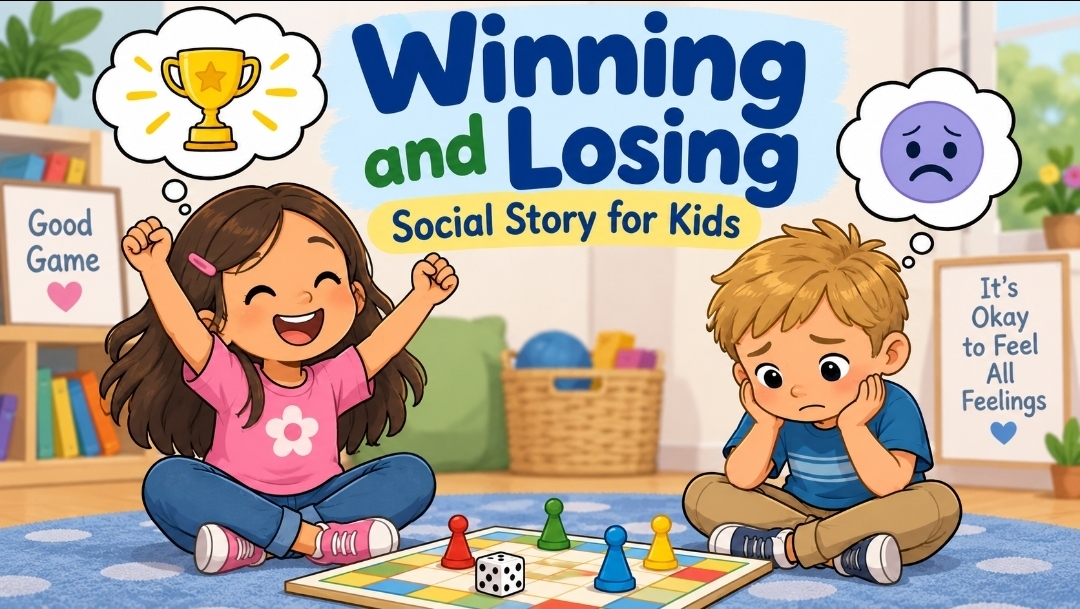
Winning and Losing Social Story
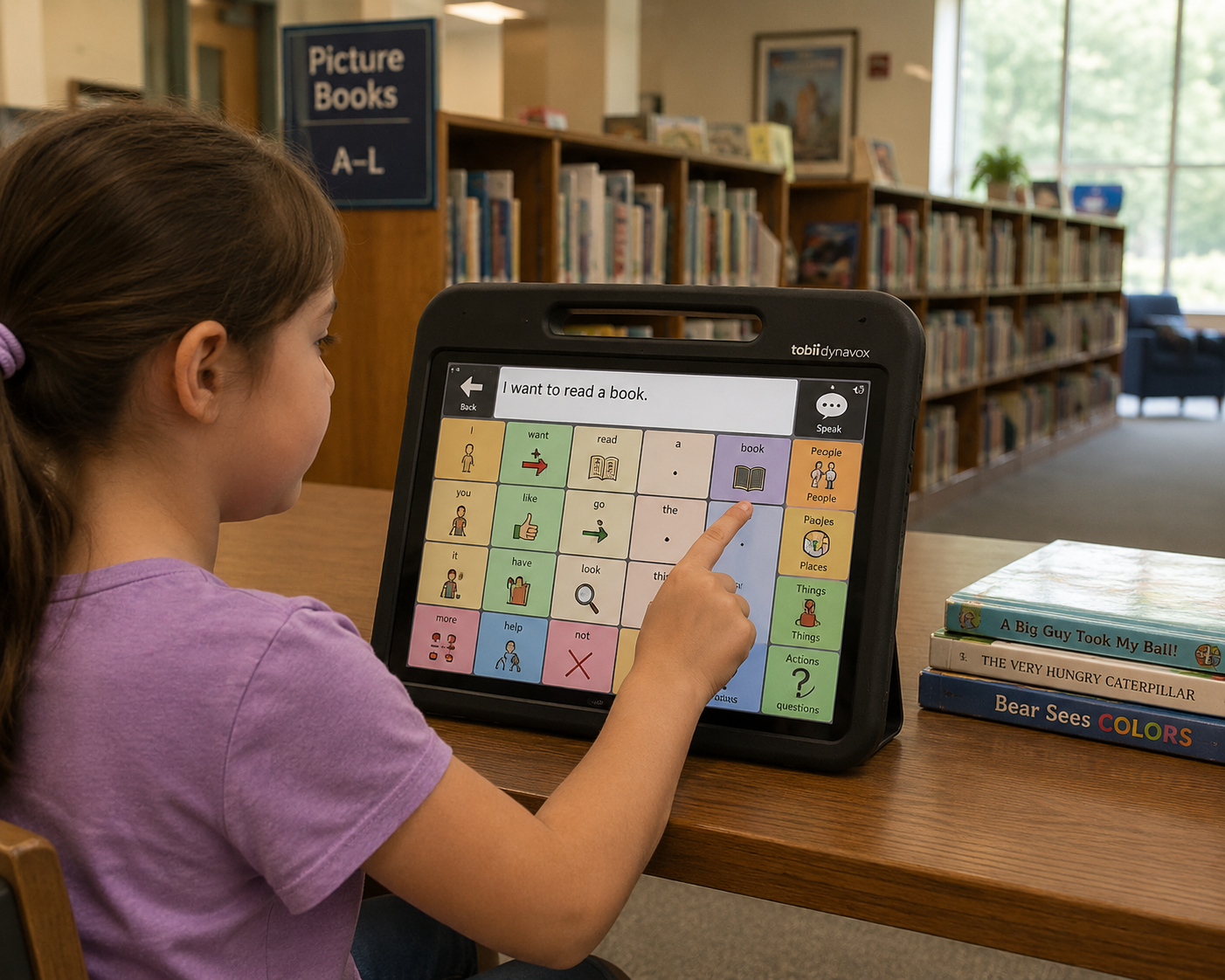
What If Communication Boards Were Installed at the Library?