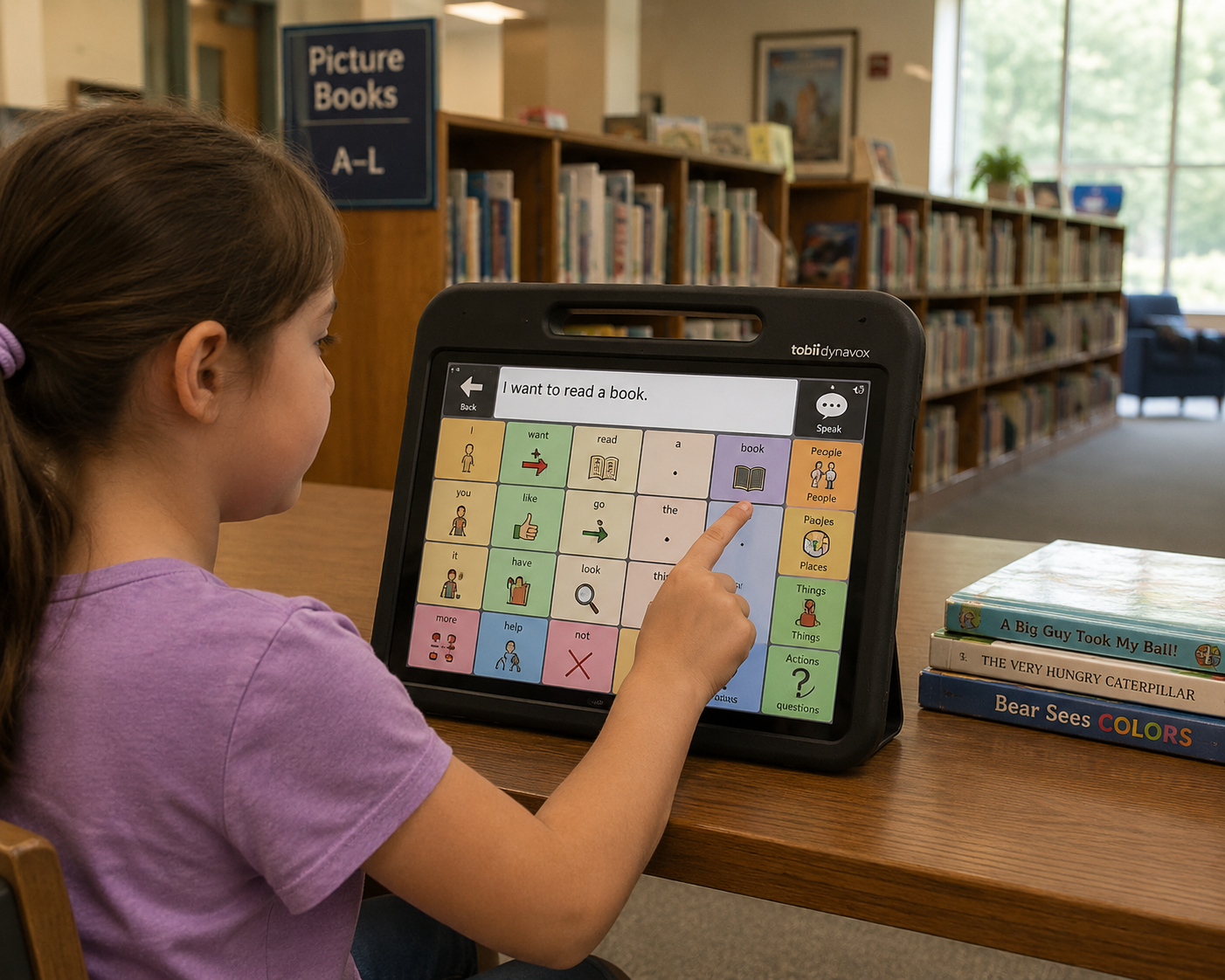
Adaptive Tools Unlock Doors for Students with Different Abilities
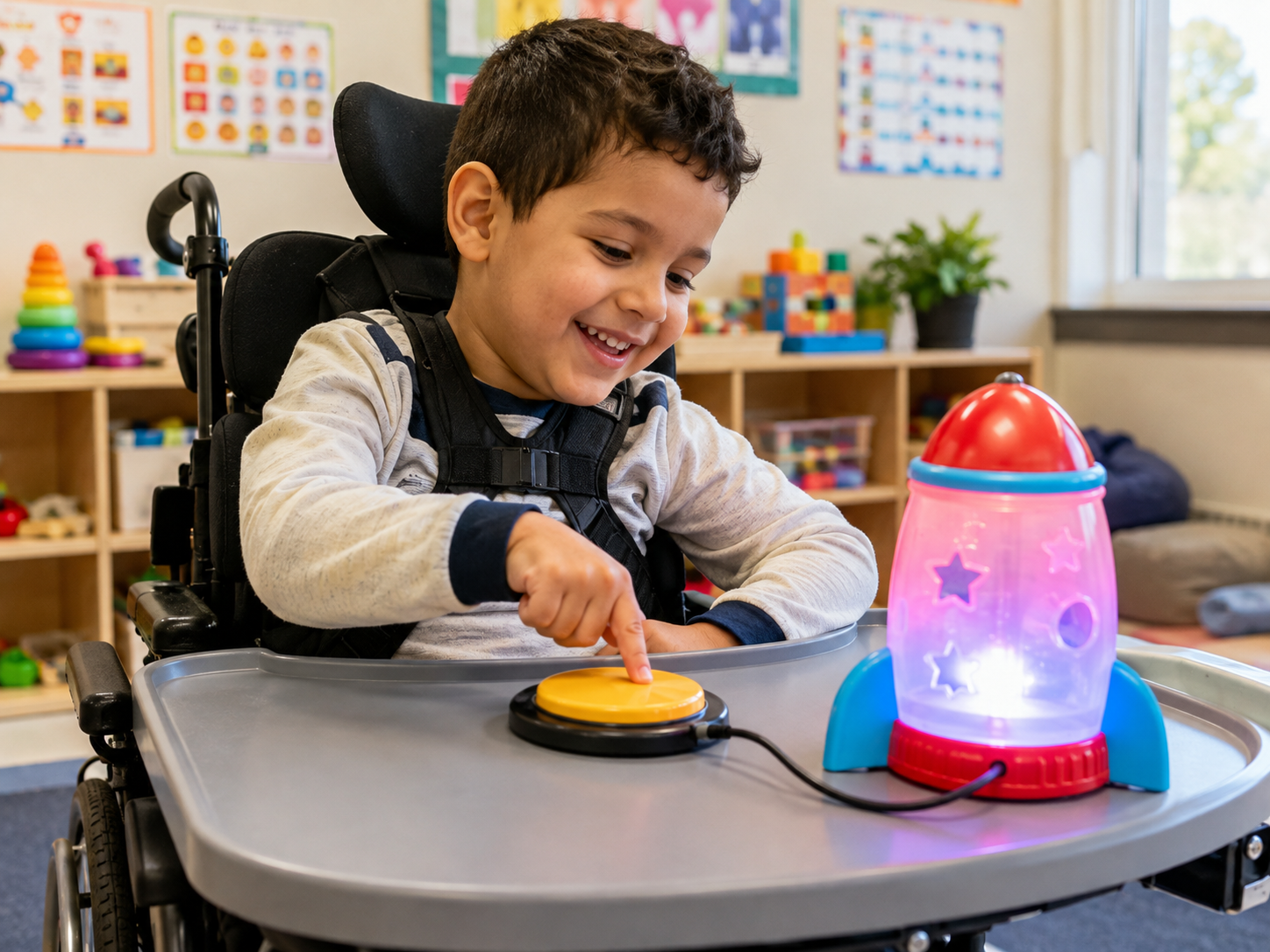
A recent news feature out of the Sooke School District highlighted an extraordinary initiative: a small group of high school robotics students at Belmont Secondary who spend their Fridays rewiring electronic toys.
By opening up standard toys and soldering in massive, accessible buttons, they create assistive devices for children with complex physical and cognitive disabilities..
By modifying these toys for just a few dollars, these high school students are making adapted toys, which are often too expensive for schools to purchase, directly accessible to special education classrooms across their district.
As a school psychologist, mobile therapist, and behavior consultant, this news story hits home deeply. It perfectly illustrates a critical clinical truth: when we proactively alter a child’s (or adult’s) environment with tools, we stop fighting their neurology and get closer to unlocking their potential and intellectual skills.
The Battlefield of Classroom Accommodations
In my daily clinical work, I witness a massive gap between what a child neurologically needs and what traditional classrooms demand.
Too often, getting a basic assistive tool into a student’s hands is met with bureaucratic friction or rigid resistance from staff.
Consider a student I work with, “Edwin,” a teen on the autism spectrum who faces heavy classroom expectations to complete handwriting tasks. To ease the immense physical strain of writing, I recommended a simple Plastic Slant Board.
Instead of an open adoption of this tool, the response from his educator was pushback: “He is never going to write anyway, so we should just do technology.” Yet, the promised technology is never deployed. Meanwhile, Edwin continues to face demands to write flat on his desk, and when he inevitably screams from sheer sensory and motor overload, the teacher reacts with frustration, commanding him to just look down at his paper.
This dynamic completely misinterprets an autistic person’s brain. Looking down while manipulating a pencil requires complex integration of the visual, vestibular, and proprioceptive systems. It is a physical coordination challenge, not a compliance issue.
By refusing a simple physical adaptation like a slant board, the classroom environment forces Edwin into a state of learned helplessness.
When adults rely strictly on verbal compliance rather than environmental modification, we build artificial barriers that actively cause trauma and mask what a student can actually achieve.
Unlocking Potential Through Cause-and-Effect
The Belmont Secondary robotics story matters because it targets this exact barrier through the lens of play and development. I once worked with another student who was profoundly motivated by sound and music.
When she was given access to a device that activated music with a simple, adapted switch, her disposition changed. She lit up, actively engaged, and demonstrated clear cause-and-effect reasoning.
If a child like her is denied access to an adapted musical toy because of funding or lack of resources, an entire aspect of her intelligence could remain invisible.
The Sooke news report directly aligns with foundational special education frameworks:
- Universal Design for Learning (UDL): We must change the tool to fit the child’s biology, rather than demanding the child change their biology to fit the tool.
- Behavior as Communication: Frustration-driven behaviors, like screaming, drop dramatically when an antecedent strategy, such as a slant board or an accessible toy switch, gives the child autonomous control over their environment.
Keeping Adults on the Same Page
Whether it is a high school robotics team rewiring electronics in a workshop, or a behavior consultant advocating for a slant board in an IEP meeting, the goal is exactly the same: keeping adults on the same page about what science says works.

Rachel Wise is the author and founder of Education and Behavior. Rachel created Education and Behavior in 2014 for adults to have an easy way to access research-based information to support children in the areas of learning, behavior, and social-emotional development. As a survivor of abuse, neglect, and bullying, Rachel slipped through the cracks of her school and community. Education and Behavior hopes to play a role in preventing that from happening to other children. Rachel is also the author of Building Confidence and Improving Behavior in Children: A Guide for Parents and Teachers.
"Children do best when there is consistency within and across settings (i.e., home, school, community). Education and Behavior allows us to maintain that consistency."
Releated Topics