How Can American Schools Better Support Student Motivation and Engagement?
|
Getting your Trinity Audio player ready...
|
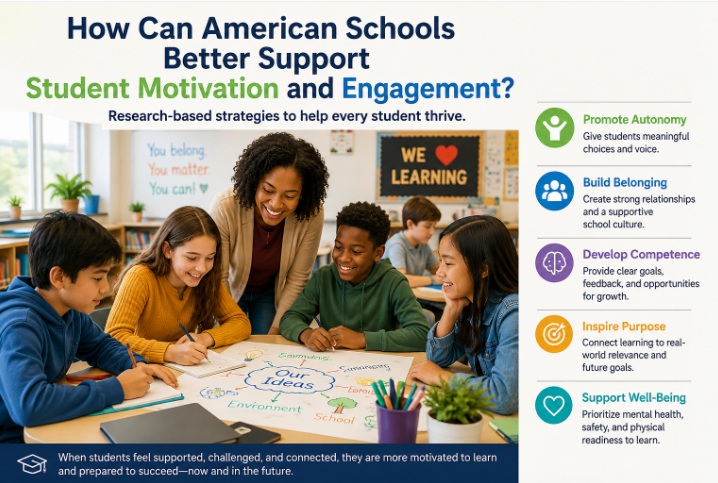
American schools can better support student motivation and engagement by aligning educational practices with research on how children and adolescents learn, develop, and stay motivated.
Rather than relying primarily on compliance, lectures, grades, and punishment, schools can create learning environments that promote autonomy, belonging, competence, purpose, and emotional and physical readiness to learn.
Instruction and Curriculum
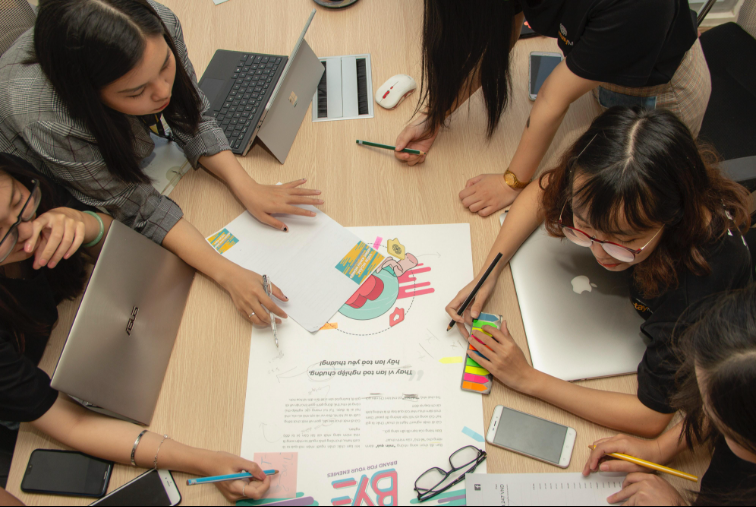
Increase student autonomy: Give students meaningful choices in topics, activities, assignments, and how they demonstrate what they have learned. This approach is supported by Self-Determination Theory, which emphasizes autonomy, competence, and relatedness as important psychological needs.
Use active learning: Reduce lengthy passive lectures and incorporate discussion, problem-solving, projects, experiments, and hands-on learning.
Make learning relevant: Connect academic concepts to students’ interests, future goals, communities, and real-world problems.
Break difficult tasks into manageable steps: Chunk complex assignments and provide scaffolding so students can experience progress without becoming overwhelmed.
Provide clear expectations: Explain learning goals, directions, examples, and rubrics before students begin challenging work.
Use frequent formative feedback: Give students timely, specific feedback that helps them improve rather than relying primarily on final grades.
Allow revision and mastery: Give students opportunities to learn from mistakes, revise their work, and demonstrate growth.
Use collaborative learning: Incorporate structured peer discussion, cooperative problem-solving, and group projects.
Use culturally responsive and inclusive materials: Ensure students can see different backgrounds, experiences, cultures, and perspectives represented in what they learn.
Teach executive-function skills: Explicitly teach planning, organization, time management, emotional regulation, problem-solving, and other skills students need to become increasingly independent learners.
School Culture and Environment
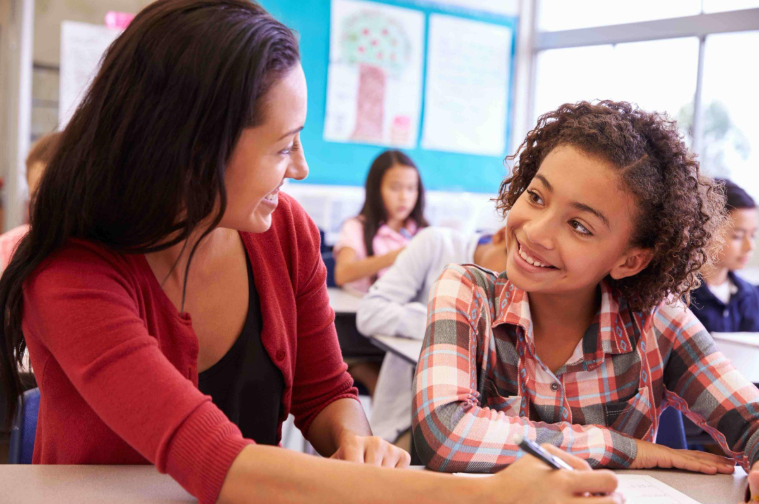
Strengthen student belonging: Create advisory, mentoring, and relationship-building systems so every student has at least one trusted adult at school.
Prioritize psychological safety: Create classrooms where students can ask questions, make mistakes, request help, and express concerns without humiliation.
Use developmentally appropriate discipline: Reduce unnecessary reliance on exclusionary and punitive discipline while using evidence-informed restorative and problem-solving approaches when appropriate.
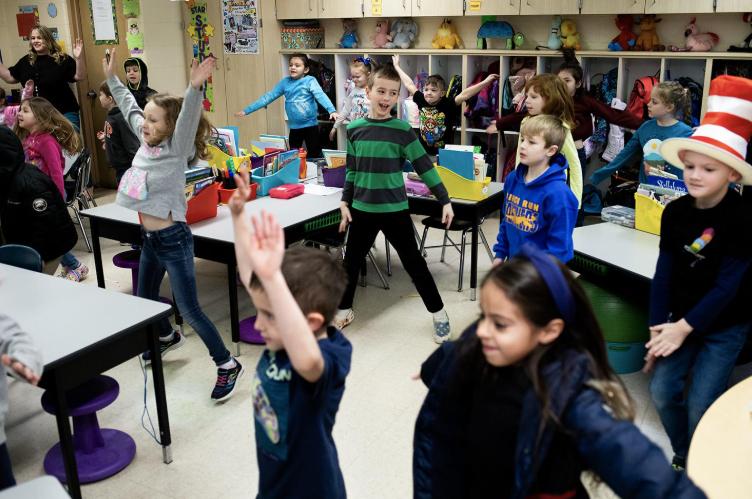
Build movement into the schoool day: Provide recess, movement breaks, physical activity, and alternatives to requiring students to remain seated for long periods.
Support adolescent sleep: Consider school schedules that better reflect adolescent sleep and circadian needs, particularly at the middle- and high-school levels.
Reduce unnecessary technology distractions: Establish reasonable boundaries around phones and other devices while using technology purposefully when it enhances learning.
Provide accessible mental-health and behavioral supports: Make prevention, early intervention, counseling, and behavioral supports easier for students to access within the school environment.
Support neurodiverse learners: Use flexible and universally designed environments that reduce unnecessary barriers for students with disabilities, ADHD, autism, learning differences, sensory needs, and other individual differences.
Motivation and Student Voice
Emphasize growth and mastery: Help students focus on developing skills and understanding rather than treating grades, rewards, or punishment as the primary reasons to learn.
Give students authentic responsibility: Allow students to contribute to classroom routines, projects, school initiatives, and age-appropriate decisions.
Regularly seek student feedback: Ask students which instructional approaches help them learn, what creates barriers, and what would make them feel more engaged.
Offer diverse pathways to success: Expand access to arts, music, trades, technology, athletics, outdoor education, career exploration, and experiential learning.
Recognize individual strengths: Create opportunities for students to succeed in areas beyond traditional academic performance.
Schoolwide and Professional Supports
Give teachers collaborative planning time: Allow educators to design lessons together, analyze student needs, and share effective strategies.
Train staff in stress- and trauma-informed practices: Help educators understand how chronic stress can affect attention, memory, behavior, emotional regulation, and learning.
Maintain manageable student-to-staff ratios: Give teachers and support professionals enough time to develop relationships and respond to individual student needs.
Use data for support rather than punishment: Examine attendance, engagement, behavior, academic progress, and student feedback to identify barriers and determine what additional support students need.
Protect time for relationships: Recognize that strong teacher-student relationships are not separate from academic achievement—they are an important part of creating the conditions in which learning occurs.
Ultimately, improving student motivation does not mean making school easier or eliminating expectations.
Students benefit from high expectations combined with strong support, meaningful autonomy, clear structure, positive relationships, relevant learning, and opportunities to experience genuine success.

Rachel Wise is the author and founder of Education and Behavior. Rachel created Education and Behavior in 2014 for adults to have an easy way to access research-based information to support children in the areas of learning, behavior, and social-emotional development. As a survivor of abuse, neglect, and bullying, Rachel slipped through the cracks of her school and community. Education and Behavior hopes to play a role in preventing that from happening to other children. Rachel is also the author of Building Confidence and Improving Behavior in Children: A Guide for Parents and Teachers.
"Children do best when there is consistency within and across settings (i.e., home, school, community). Education and Behavior allows us to maintain that consistency."
Releated Topics