Can a Question Before Learning Help Kids Remember More?
What happens when we give a child something to wonder about before they learn the answer?
Research suggests that asking a relevant question first can help learners remember the information they were asked about.
Researchers sometimes call this prequestioning, but the strategy itself can be very natural.
Try It With a Story
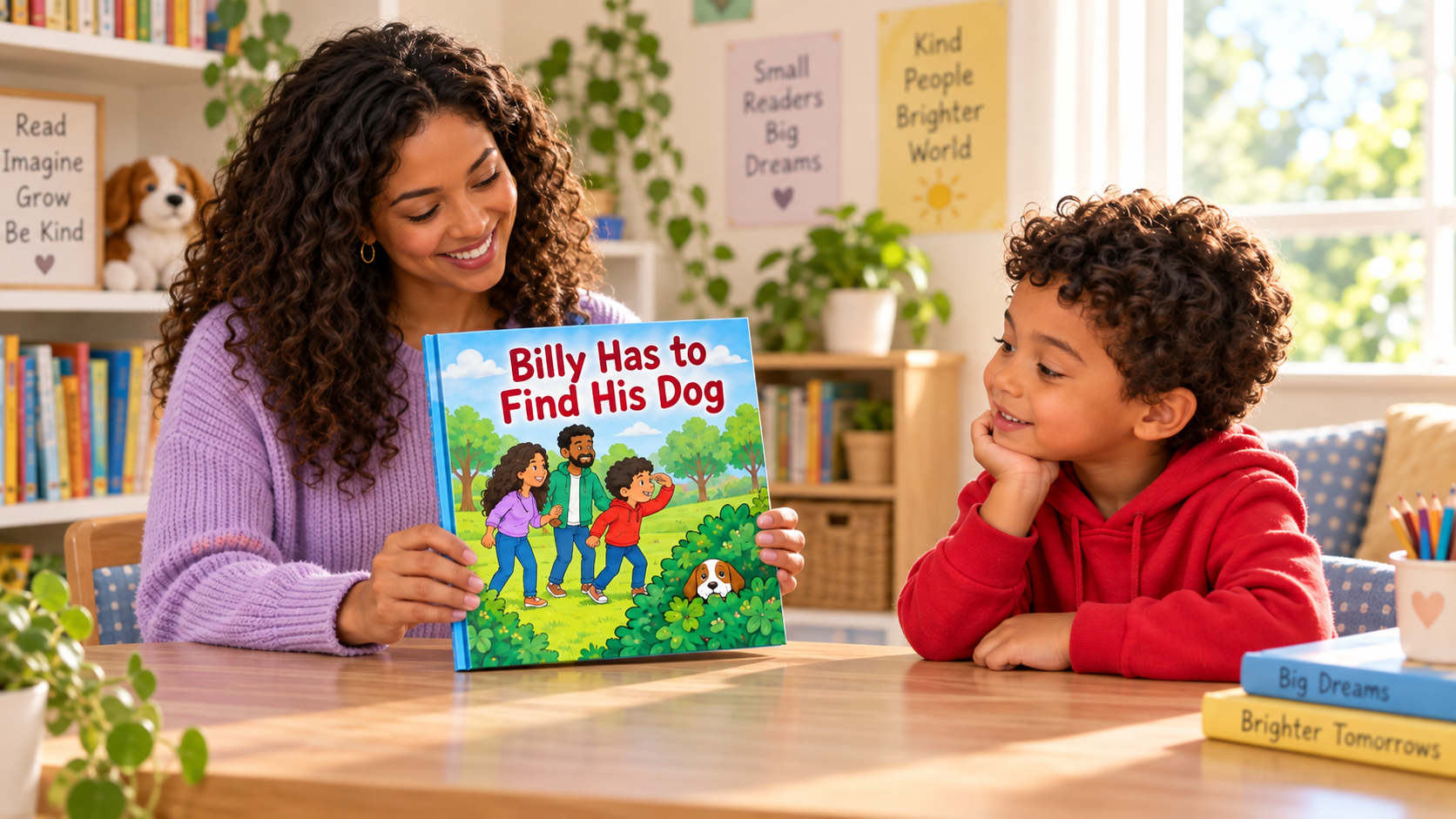
Imagine a book called Billy Has to Find His Dog. On the cover, Billy and his parents are searching while the dog is nearby but out of sight.
Before reading, you might ask:
“What do you think will happen in the story?”
Or, if a more specific question works better for the learner:
“Do you think Billy will find his dog?”
Give the child a moment to think. If they’re unsure, you may offer a little guidance based on the cover:
“What do you see?”
“Who is on the cover?”
“What do you think they’re doing?”
“It looks like they’re looking for something. What do you think it could be?”
Depending on the child and the situation, you might use one or more guiding questions, offer picture choices, model your own prediction, or simply say:
“Let’s see!”
Then read the story together.
Afterward, come back to the original question and talk about what happened.
The goal isn’t for the child to predict correctly. It’s to give them something meaningful to notice and think about before they find out.
Why Might It Help?
Research suggests that asking a question before learning can help people remember the information they were asked about.
The benefit was strongest for the specific information connected to the question.
A Few Ways to Try It
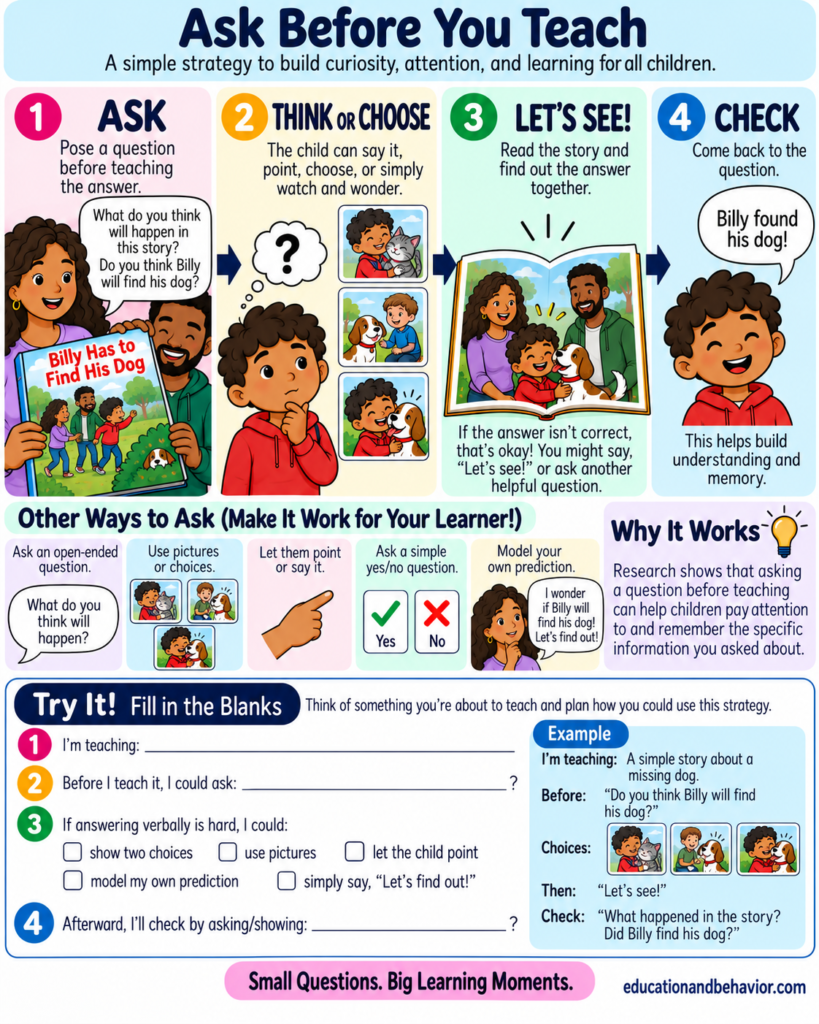
Before reading: “What do you think will happen in the story?
You can also explore these reading comprehension strategies for kidsfor more ways to support understanding while reading.
”Before science: “Which one do you think will sink?”
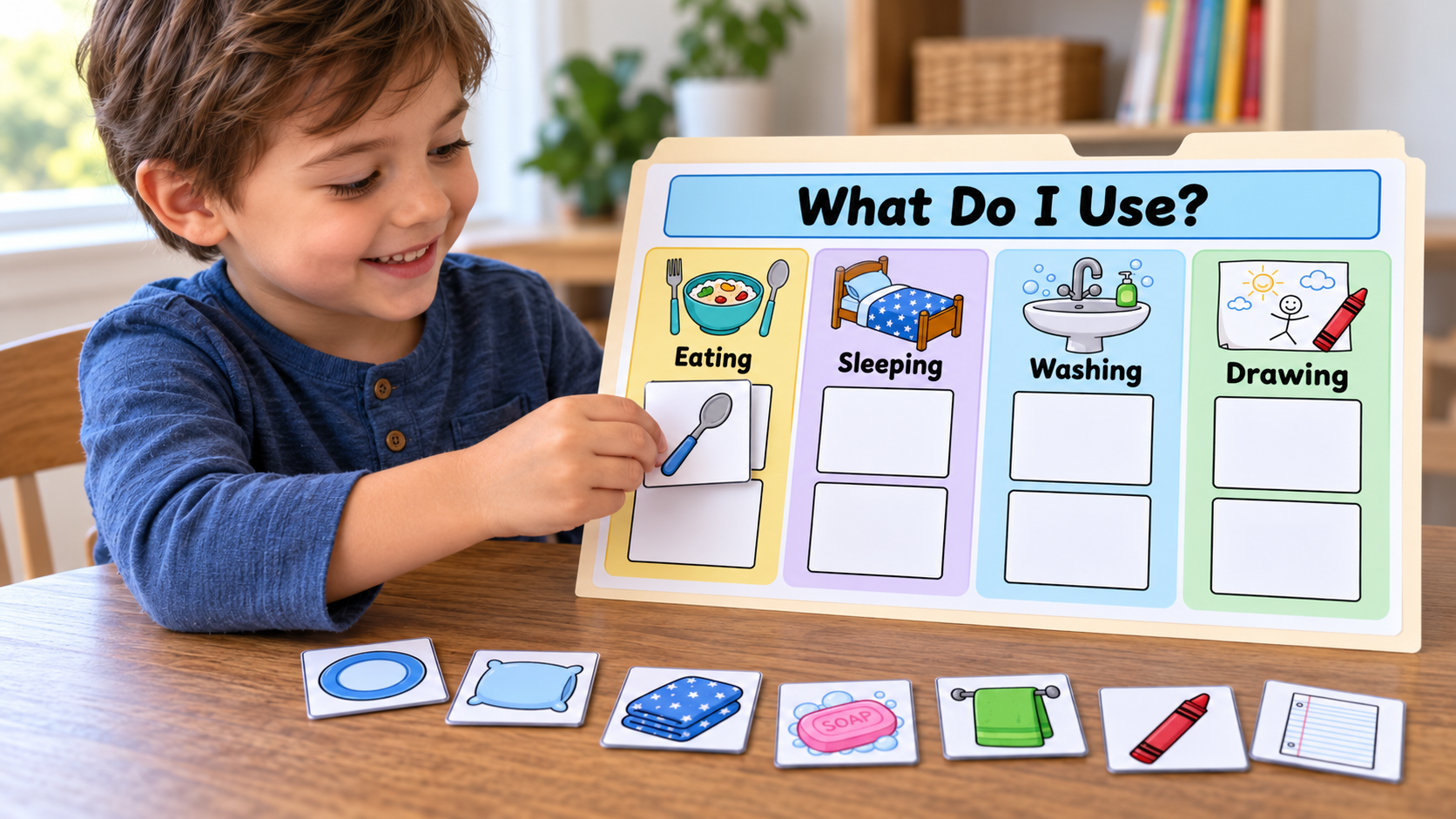
Before a life-skills activity: “What do you think we use to scrub a dish?”
Depending on the child and the situation, you might use a guiding question, offer picture choices, model your own prediction, or simply say, “Let’s see!”
Some learners may respond using a communication device, sign language, gestures, or another communication method.
You don’t need to use this with every activity or expect a correct answer.
It’s simply one strategy for giving a learner something meaningful to notice, think about, or look for before finding out.
Ask → Think or Choose → Find Out → Check

Rachel Wise is the author and founder of Education and Behavior. Rachel created Education and Behavior in 2014 for adults to have an easy way to access research-based information to support children in the areas of learning, behavior, and social-emotional development. As a survivor of abuse, neglect, and bullying, Rachel slipped through the cracks of her school and community. Education and Behavior hopes to play a role in preventing that from happening to other children. Rachel is also the author of Building Confidence and Improving Behavior in Children: A Guide for Parents and Teachers.
"Children do best when there is consistency within and across settings (i.e., home, school, community). Education and Behavior allows us to maintain that consistency."
Releated Topics