What If Communication Boards Were Installed at the Library?
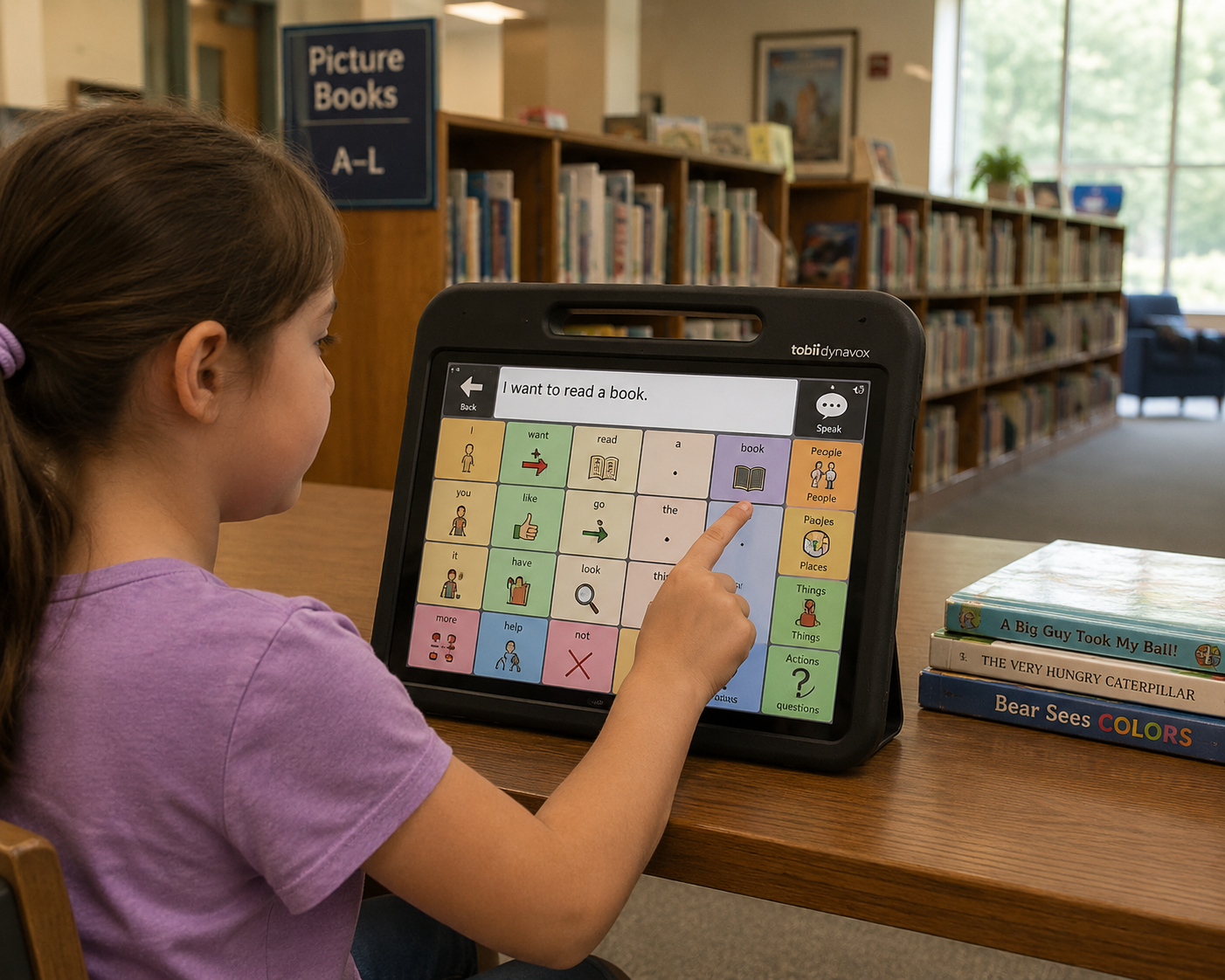
For many people, walking into a public library and communicating what they need is something they never have to think about.
For a person who is nonspeaking or has difficulty with spoken communication, that may not always be the case.
An initiative in Massachusetts offers an interesting example of how communities can begin changing the experience for those with communication differences (such as individuals on the autism spectrum) in public spaces.
The Autism Society of Massachusetts Inclusion Network works with libraries, museums, airports, recreation centers, pools, hospitals, schools, police departments and other community locations to make public spaces more accessible to people on the autism spectrum.
One of the central features is surprisingly simple: a visual communication board displayed in the environment.
The board contains pictures and symbols that allow someone with limited or no spoken language to communicate by pointing.
Why This Matters to Me as a Behavior Consultant
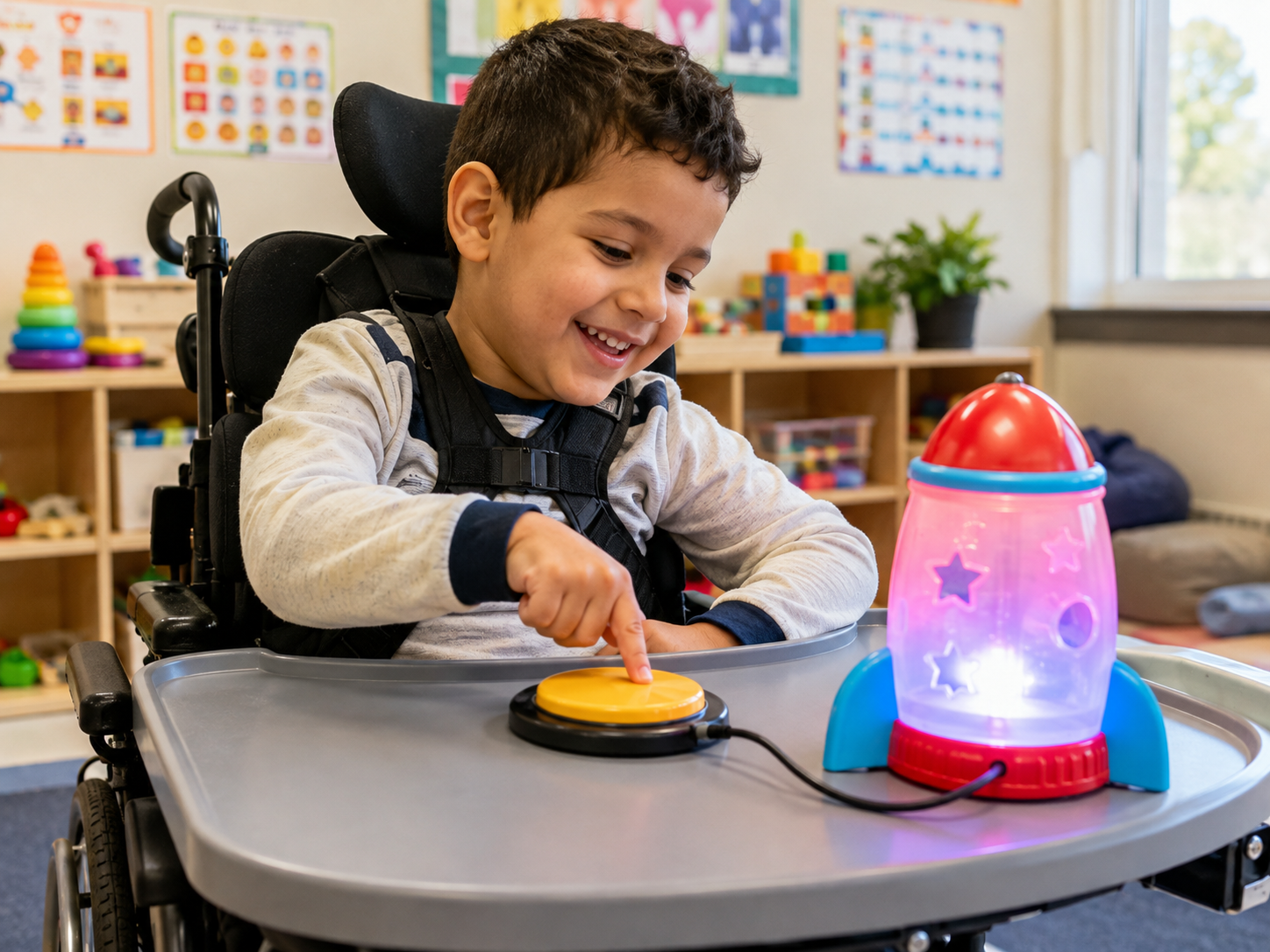
As a behavior consultant, I work with children who use augmentative and alternative communication (AAC) devices, and I have seen the progress and benefits that can come with having an effective way to communicate.
That experience immediately made me think about a very ordinary situation.
What if one of my clients went to the library and their caregiver forgot their AAC device?
What if the device wasn’t available for some other reason?
If a communication board were already available at the library, the child would still have another option.
It isn’t intended to replace someone’s individualized AAC system.
It’s another way of making communication accessible in the environment.
What Should Be on a Library Communication Board?
A useful board should include core communication that can apply in many environments, such as:
- Yes
- No
- Help
- More
- Break
- Bathroom
- Hello
- Goodbye
I also think communication boards are more useful when they are customized to the environment.
At a library, for example, someone might want to communicate:
- I want to read
- I want to look at books.
- I want to play a game.
- I want to use the computer.
- I want to sit down.
- I want a drink of water.
Some vocabulary can remain consistent across environments, while other vocabulary can change depending on where the board is located.
A communication board or device at a store wouldn’t necessarily need all of the same choices as one at a library. We can customize it to the environment.
Put Communication Where People Can Access It
Accessibility also depends on placement. I would not want a communication board kept behind a circulation desk where someone has to ask an employee for it.
Think about the contradiction in that. A person experiencing a communication barrier would first have to communicate that they need access to a tool that helps them communicate.
Instead, communication supports could be visible just like computers, printers and other resources available to library patrons.
Ideally, it would be great to see communication supports in areas where people are likely to need them such as the entrance/exit, the children’s section, the computer area, activity spaces and other frequently used locations.
A simple sign could make its purpose clear:
Communication Board – Anyone Can Use This
Staff Don’t Need to Become AAC Specialists
Some basic staff education could make the resource considerably more useful.
If a person can independently point to a symbol, the staff member may simply need to recognize that the person is communicating and listen to what they are telling them.
Other individuals may need more assistance navigating the board.
Having staff members who understand what the board is, why it is there and the basics of responding to someone using it could open another avenue of accessibility.
Libraries would have to determine what level of training is appropriate, how staff responsibilities are handled and whether additional training or responsibilities should be compensated.
The goal isn’t to turn librarians into therapists.
It’s to make communication easier.
The Board Can Change With the Community
Another advantage of communication boards is that they can be modified.
Suppose someone visits a particular library regularly and consistently uses the communication board.
Staff and the person’s caregivers may eventually discover that an important word, activity or request is missing. Why not add it?
Accessibility doesn’t necessarily have to be designed once and then remain unchanged forever.
A basic board can serve the larger community while still allowing reasonable adjustments when a regular patron demonstrates a particular communication need.
We Also Don’t Know Who Will Use Something Until We Make It Available
A library might reasonably wonder whether enough patrons would use a communication board to justify having one.But there is a problem with measuring accessibility that way.
Sometimes we don’t know who will use an accommodation until the accommodation exists.
A communication board at the library tells nonspeaking visitors who use AAC:
Your way of communicating is accepted here. To me, that creates a sense of normalcy.
AAC doesn’t have to be something unusual that appears only in a special-education classroom or therapy session.
It can simply be another way people communicate.
This Doesn’t Have to Be an Expensive Project
The Massachusetts Autism Inclusion Network demonstrates what a more organized community initiative can look like.
Its participation options range from a basic communication banner to customized materials, staff training, consultation and broader accessibility support.
But every community organization doesn’t necessarily have to begin with a large formal program.
A library, recreation center, school, community center or other organization interested in the idea could explore a much smaller pilot.
A professionally produced permanent outdoor communication board can cost considerably more, but an indoor pilot could potentially begin with something as simple as a printed and laminated communication board.
An organization might also explore whether an available tablet could provide an appropriate communication option, although any AAC app, symbol licensing, device security and accessibility considerations would need to be addressed.
Community organizations could also seek donated equipment or partner with autism organizations, speech-language professionals, AAC users, schools or local businesses.
The important point is that testing an accessibility idea doesn’t always require launching an expensive organization-wide program first. We can try the following:
- Start somewhere
- Make the communication support visible.
- Explain it to staff.
- See whether people use it.
- Ask users and families what would make it better.
- Then work to improve it if needed.
Measure More Than Numbers
I would encourage an organization piloting something like this to collect information about how the resource is helping. How are people using it? Which words are used? What’s missing?
Did it allow someone to communicate something they otherwise struggled to express?
That information could help improve the board and could also be shared with other organizations considering something similar.
At the same time, I wouldn’t consider a communication board unsuccessful simply because only one person used it.
If one person needed it and was able to communicate because it was there, that is meaningful – particularly when the accommodation can be provided inexpensively.
Accessibility isn’t valuable only when large numbers of people need it.
A Real-World Example Already ExistsThis isn’t entirely theoretical.
The Autism Society of Maryland reports that it provided communication boards to all six branches of the Howard County Public Library system in 2023.
The organization and The Arc of Maryland also presented information to library staff about using the boards.
The same organization has supported communication boards in public-school playgrounds and public parks..
These examples give other communities something valuable to examine:
- What worked?
- How were the boards used?
- What did staff learn?
- What would they change?
Instead of every library or community organization starting from scratch, communities can learn from places already experimenting with public AAC access.
The Bigger Message
What I find most meaningful about this idea isn’t actually the board itself.
It’s what its presence communicates.
Imagine a child who uses an AAC to communicate, walking into a library and seeing a communication board already there.
Nobody had to call ahead.
Their caregiver didn’t have to explain why they needed it.
It’s simply part of the environment.
That tells the child that their way of communicating is normal, acceptable and welcome in that location.
And perhaps that is one of the simplest ways a community can demonstrate inclusion:
Don’t just tell people they belong. Build their needs into the places where everyone else already belongs.

Rachel Wise is the author and founder of Education and Behavior. Rachel created Education and Behavior in 2014 for adults to have an easy way to access research-based information to support children in the areas of learning, behavior, and social-emotional development. As a survivor of abuse, neglect, and bullying, Rachel slipped through the cracks of her school and community. Education and Behavior hopes to play a role in preventing that from happening to other children. Rachel is also the author of Building Confidence and Improving Behavior in Children: A Guide for Parents and Teachers.
"Children do best when there is consistency within and across settings (i.e., home, school, community). Education and Behavior allows us to maintain that consistency."
Releated Topics