5 Helpful Tips to Make the School Atmosphere More Appealing to Teens
Here are five ways to enhance the school atmosphere to make it more appealing to teens:
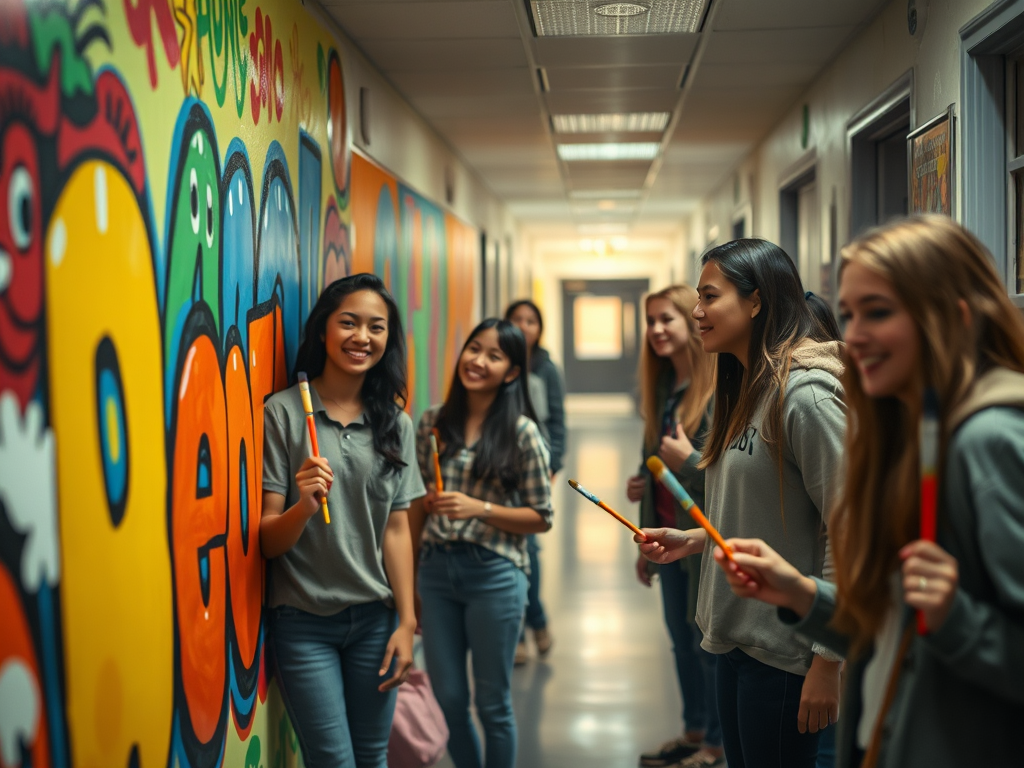
1. Student-Led Decor: Allow students to personalize parts of the school with their artwork, murals, or creative projects to make the environment feel more like their own.

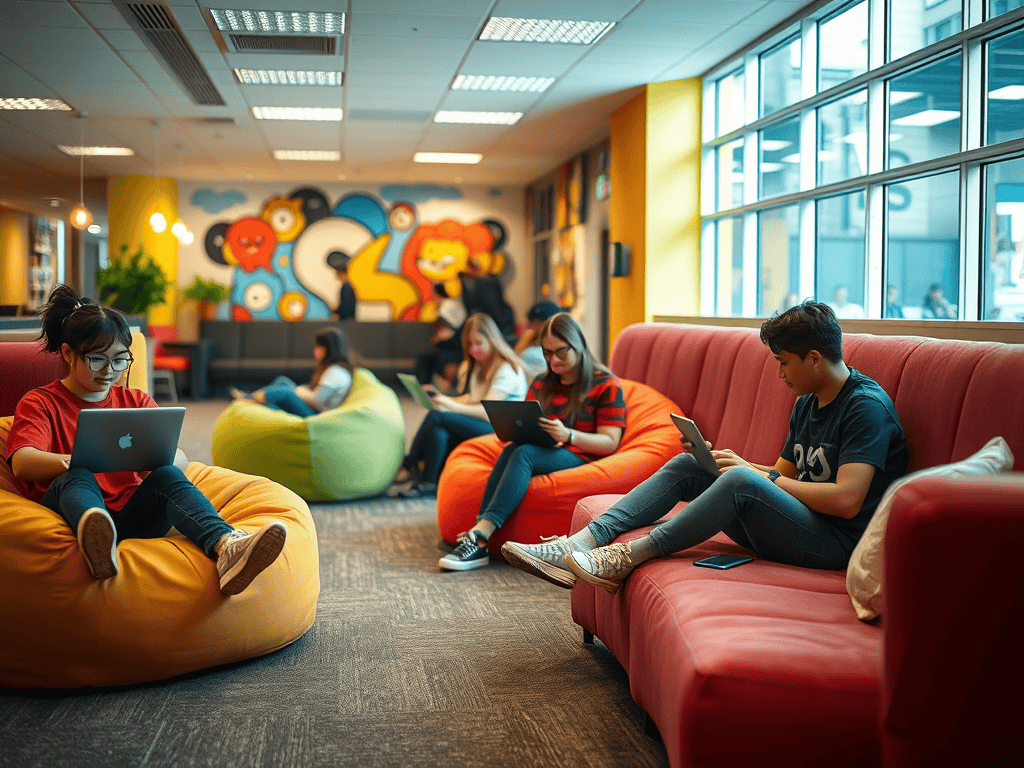
2. Modernized Common Areas: Transform common areas like lounges or cafeterias into trendy, comfortable spaces with stylish furniture, charging stations, and music to create a more inviting vibe.
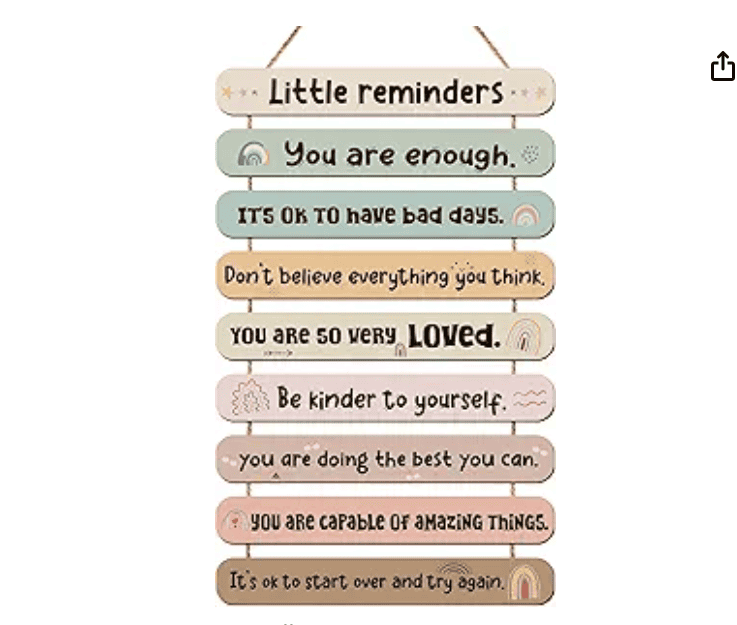
3. Positive and Inclusive Messaging: Display inspiring quotes, motivational posters, and messages promoting kindness and inclusivity to create a welcoming and supportive environment.
4. Music During Breaks: Play motivating music in hallways or common areas during breaks and lunch to energize the atmosphere and create a fun vibe.

5. Celebrating Student Culture: Highlight and celebrate diverse cultures, interests, and achievements by featuring themed decorations, cultural events, and recognition walls that reflect the student body’s diversity.
References
- Baker, M. (2007, August 1). Music moves brain to pay attention, Stanford study finds. Stanford Medicine News Center. https://med.stanford.edu/news/all-news/2007/07/music-moves-brain-to-pay-attention-stanford-study-finds.html
- Escobar-Soler, C., Berrios, R., Peñaloza-Díaz, G., Melis-Rivera, C., Caqueo-Urízar, A., Ponce-Correa, F., & Flores, J. (2024). Effectiveness of self-affirmation interventions in educational settings: A meta-analysis. Healthcare (Basel), 12(1), 3. https://doi.org/10.3390/healthcare12010003
- Abimbola Eden, C., Chisom, O. N., & Adeniyi, I. S. (2024). Cultural competence in education: Strategies for fostering inclusivity and diversity awareness. International Journal of Applied Research in Social Sciences, 6(3), 383-392. https://doi.org/10.51594/ijarss.v6i3.895
You May Also Like: 5 Tips for Optimizing Classroom Setup for Students with ADHD and Autism Spectrum Disorder (ASD)

Rachel Wise is the author and founder of Education and Behavior. Rachel created Education and Behavior in 2014 for adults to have an easy way to access research-based information to support children in the areas of learning, behavior, and social-emotional development. As a survivor of abuse, neglect, and bullying, Rachel slipped through the cracks of her school and community. Education and Behavior hopes to play a role in preventing that from happening to other children. Rachel is also the author of Building Confidence and Improving Behavior in Children: A Guide for Parents and Teachers.
"Children do best when there is consistency within and across settings (i.e., home, school, community). Education and Behavior allows us to maintain that consistency."
Releated Topics